
 Back
Back
 24
24 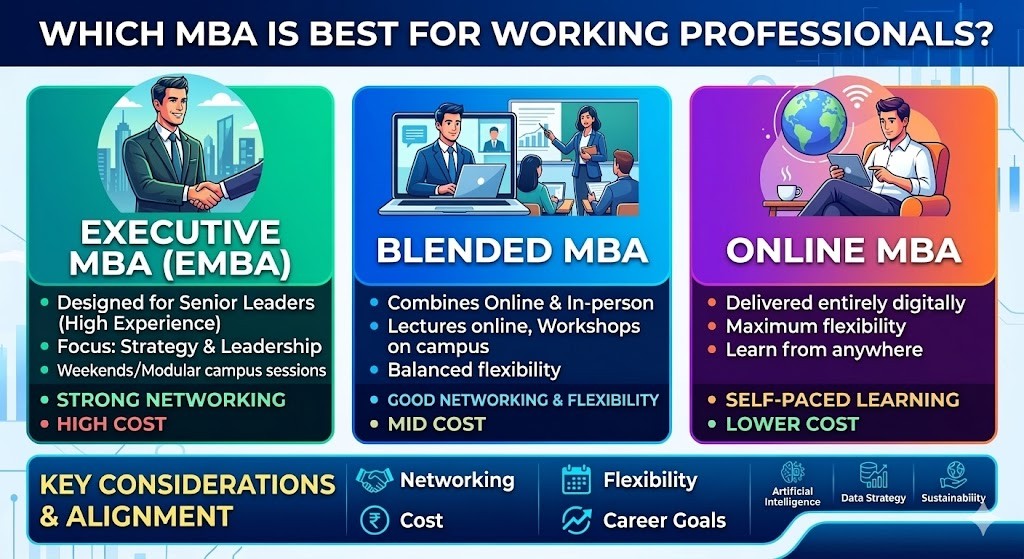
Executive MBA vs Blended MBA vs Online MBA ?
At some stage in their career, professionals feel the need to strengthen their business knowledge and leadership capabilities. For those who don’t have an MBA, this is often considered a useful qualification for corporate growth.
While older professionals usually avoid full time regular MBA’s, there are a plethora of formats designed for this — including Executive MBA programs, Blended Learning MBAs, and fully Online MBAs.
Understanding the differences between these programs can help professionals choose a program that fits both their work commitments and career goals.
Understanding different MBA formats
Executive MBA (EMBA)
Executive MBA programs are designed for professionals with several years of work experience. Classes are typically scheduled on weekends or delivered through modular campus sessions so participants can continue working while studying.
These programs emphasise leadership development, strategic thinking, and real-world business decision-making. Peer learning also plays a major role, as participants often come from diverse industries and professional backgrounds.
Many companies sponsor candidates and in other cases, professionals can directly join these programs. Job placements are usually not available for such programs (In India)
Blended Learning MBA
Blended MBA programs combine online learning with periodic classroom sessions. Participants usually complete lectures and coursework online, while attending in-person workshops, campus modules, or group sessions at scheduled intervals.
This model offers flexibility while preserving opportunities for interaction with faculty and peers. Many professionals find this format appealing because it combines the convenience of online learning with the structure and networking benefits of classroom learning.
Online MBA
Online MBA programs are delivered entirely through digital platforms. Lectures, assignments, and discussions take place virtually, allowing professionals to learn from anywhere while managing full-time jobs. Both live and recorded options are usually available in such programs with some minimal in-person contact sessions in rare cases.
For professionals who need maximum flexibility or who travel frequently, online MBA programs can provide a convenient way to continue education.
What to look for in a program?
When comparing MBA formats, one should consider several practical factors:
Learning experience
Executive and blended MBA programs often include in-person interaction, case discussions, and group projects. Online programs rely more heavily on virtual lectures and independent study.
Networking opportunities
Programs with classroom interaction often offer stronger networking opportunities with peers, alumni, and faculty.
Flexibility
Online MBAs provide the highest flexibility, while blended programs offer a balance between flexibility and structured learning.
Cost considerations
Executive MBA programs are usually the most expensive, followed by blended programs, while online MBAs tend to be more affordable.
Choosing Programs aligned with your career needs
One of the most important factors in selecting an MBA is ensuring that the program supports your professional trajectory, immediate situation, and goals. Professionals often benefit most from programs that are closely connected to their current field of work. For example:
- Marketing professionals could choose programs with specialisations in digital marketing or customer analytics.
- Finance professionals may prefer programs with strong financial management or fintech components.
- Technology professionals may benefit from programs focusing on technology management or product strategy.
- Manufacturing and Ops professionals could look at Supply Chain, Project management and other specializations.
Choosing a program aligned with existing experience allows professionals to apply learning directly to their work.
Don’t forget to add Future-focused specialisations
In addition to alignment with current roles, professionals should strongly consider emerging fields that are shaping the future of work.
Many MBA programs now offer specialisations such as:
- Business Analytics
• Artificial Intelligence and Data Strategy
• Digital Transformation
• Product Management
• Sustainability and ESG
These areas are increasingly relevant across industries and can help professionals prepare for evolving roles in modern organizations. Make sure to build capabilities in as many of these and more as relevant to your career and industry.
Practical Tips for Evaluating MBA Programs
Before choosing a program, professionals should carefully review several aspects:
- Reputation and quality of the institution offering the program
- Curriculum relevance to current and future industry needs
- Faculty expertise and industry exposure
- Opportunities for real-world projects or case studies
- Alumni network and career outcomes
- Flexibility of program delivery
- Certification and credentials
- Cost and ROI if applicable
Speaking with alumni or attending information sessions can also provide valuable insights into the learning experience.
Final Thought
An MBA can be a powerful catalyst for career growth. The key is choosing a program that aligns with your current expertise while preparing you for the skills and industries that will define the future of work.
Disclaimer: Career Plaza features informational content about services relevant to professionals. LA-PRO does not endorse or certify third-party providers.